
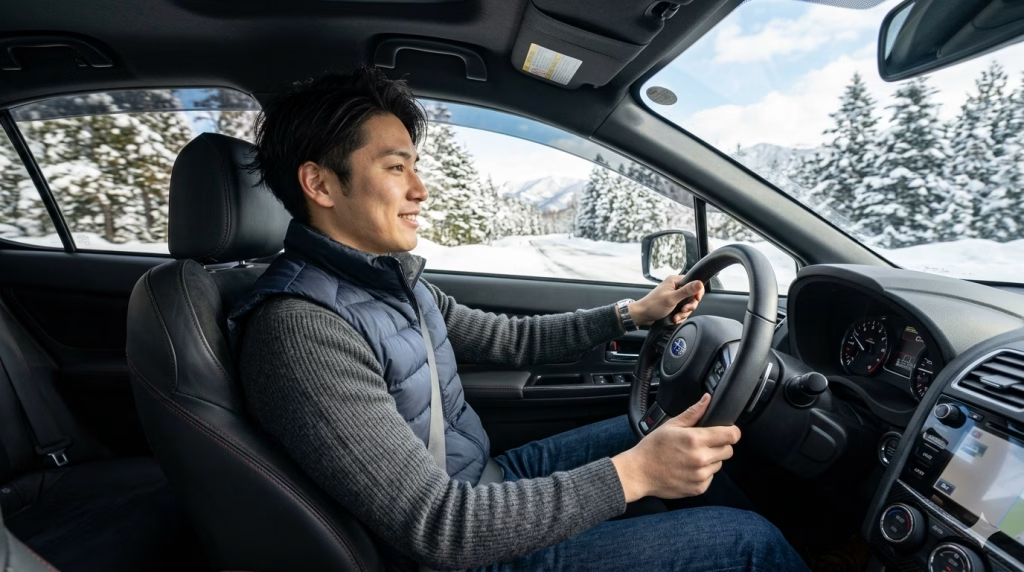
Mastering the Freeze: The Winter Driving Guide for Men 2026

TEGAROOM – Winter transforms the landscape into a challenging arena that tests both man and machine. For the modern automotive enthusiast, the arrival of snow and ice isn’t just a weather change; it is a technical challenge that demands preparation, precision, and the right gear. Navigating the treacherous conditions of the colder months requires more than just a sturdy set of tires. It involves a holistic understanding of how cold temperatures affect mechanical systems and how a driver must adapt their instincts to maintain control when the pavement disappears under a layer of white.
The Essential Winter Mechanical Audit for Peak Performance
Before the first frost settles on the windshield, a comprehensive mechanical audit is the foundation of winter survival. Cold weather is notoriously brutal on lead-acid batteries, as the chemical reactions required to generate power slow down significantly when the temperature drops. A battery that functions perfectly in the summer might fail to provide the necessary cranking amps in January. Testing your battery’s voltage and ensuring the terminals are free of corrosion is the first step in avoiding a cold morning breakdown.
Beyond the electrical system, fluids play a critical role in keeping your engine from seizing or overheating. Many drivers forget that engine coolant, or antifreeze, must be mixed at the correct ratio to prevent freezing inside the block. A 50/50 mix is standard, but in extreme northern climates, a 60/40 ratio might be necessary. Furthermore, switching to a lower-viscosity synthetic oil can provide better lubrication during those initial seconds after a cold start, reducing internal wear when the oil is thickest.
Tire Technology and the Science of Winter Grip
The most common misconception in the automotive world is that all-wheel drive makes a vehicle invincible in the snow. While AWD helps with acceleration, it does nothing for braking or turning on ice. The real hero of winter driving is the tire compound. Summer and even many all-season tires are made of a rubber that hardens into a plastic-like consistency when temperatures drop below 7 degrees Celsius. This loss of elasticity means the tire can no longer “bite” into the road surface, leading to dangerous slides.
Dedicated winter tires are engineered with high-silica compounds that remain soft and pliable even in sub-zero temperatures. These tires also feature thousands of tiny slits known as sipes, which act as small claws to grab onto ice and packed snow. For the man who values performance and safety, swapping to a dedicated set of winter wheels is not an optional luxury but a mechanical necessity. It is the difference between confidently navigating a mountain pass and spinning out on a suburban corner.
Professional Driving Techniques for Low Friction Surfaces
Driving in winter is an exercise in smoothness and anticipation. The key to maintaining control on slippery roads is to avoid any sudden inputs. Rapid acceleration, hard braking, and aggressive steering maneuvers are the primary catalysts for a loss of traction. Instead, imagine there is an egg between your foot and the pedals. Gradually increasing pressure allows the tires to find grip rather than spinning uselessly against the ice.
When a slide does occur, understanding the physics of your vehicle is paramount. For front-wheel-drive cars, understeer is the most common issue, where the car continues straight even when the wheels are turned. The instinct is to turn harder, but the correct response is to ease off the throttle and straighten the wheel slightly to let the tires regain their “bite.” In rear-wheel-drive vehicles, oversteer or “fishtailing” is the risk. In this scenario, steering into the direction of the skid while maintaining a neutral throttle is the professional way to bring the tail back in line.
Building a Tactical Winter Emergency Kit
A prepared man never assumes the journey will go exactly as planned. Winter storms can move in quickly, turning a routine commute into a survival situation. Your vehicle should be equipped with a tactical emergency kit that goes beyond a simple spare tire. This kit should include high-quality jumper cables or a portable lithium-ion jump starter, a collapsible shovel for digging out of snowbanks, and a bag of sand or salt to provide immediate traction under the drive wheels.
Visibility is another critical factor often overlooked. A heavy-duty ice scraper with a brass blade can clear a windshield much faster than plastic, and keeping an extra gallon of de-icing washer fluid in the trunk is essential when road salt creates a constant film on your glass. For personal safety, always carry a heavy wool blanket, waterproof gloves, and a high-lumen flashlight. These items ensure that if you are stranded, you remain warm and visible until help arrives or the storm passes.
Winter Detailing and Protecting Your Automotive Investment
The salt and chemical de-icers used by road crews are the natural enemies of automotive paint and undercarriages. Sodium chloride and magnesium chloride are highly corrosive, and if left to sit, they will eventually lead to rust and structural degradation. Protecting your investment during the winter requires a proactive approach to detailing. Applying a high-quality ceramic coating or a thick layer of synthetic wax before the season begins creates a sacrificial barrier against the elements.
Regularly washing the vehicle during the winter is equally important, but it must be done correctly. It is essential to use an undercarriage wash to flush out salt from the wheel wells and frame rails. Many enthusiasts choose to apply a fluid film or woolwax coating to the underside of their vehicles for an extra layer of protection. This oily barrier prevents moisture and salt from reaching the bare metal, ensuring that your car looks as good in the spring as it did in the autumn.
Lighting and Visibility Upgrades for Darker Days
With the sun setting earlier and heavy snow squalls reducing visibility to near zero, your lighting system becomes your primary communication tool with other drivers. Standard halogen bulbs often struggle to pierce through dense fog or falling snow. Upgrading to high-output LED or HID bulbs can significantly improve your field of vision. However, it is vital to ensure these bulbs are properly aimed so they do not blind oncoming traffic, which is a common mistake that increases the risk of accidents.
Fog lights are specifically designed to be mounted low on the vehicle to shine underneath the fog bank rather than reflecting off it. Using amber or yellow lenses for these lights can further improve contrast in white-out conditions. Additionally, ensuring your headlight lenses are clear of oxidation is a simple Saturday afternoon task that can yield a 20% to 30% increase in light output. Being able to see a hazard two seconds earlier can be the difference between a close call and a collision.
The Psychological Edge of a Winter Ready Mindset
Ultimately, the most important component of a vehicle is the driver. Developing a winter-ready mindset means acknowledging that the rules of the road have changed. It means leaving five minutes earlier to allow for a slower pace and increasing your following distance to at least three times the normal length. It is about the discipline to stay home when the conditions exceed your vehicle’s capabilities or your own comfort level.
Confidence in winter driving comes from experience and preparation. Practicing maneuvers in an empty, snow-covered parking lot can help you understand how your ABS (Anti-lock Braking System) feels when it engages and how your car reacts when it loses grip. This “controlled failure” builds the muscle memory needed to react calmly when a real emergency occurs. When you combine technical knowledge of your vehicle with the right equipment and a focused mindset, you don’t just survive the winter—you master it.